Korean suppliers have spent years engineering the cushion compact. When it's done well, it can control how formula is dispensed, keep it protected between uses, and deliver a consistently smooth application every time. If you're developing a foundation, BB cream, tinted SPF, or a skincare-cosmetic hybrid, it's best to understand how it works before you start sourcing. The foam, mesh, and cushion applicator all influence how the formula performs, which is why choosing the best cushion compact specifically for your formula and product usage is so important.
Looking to source cushion compact packaging?
Browse cushion compact suppliers on Impacked →
The Format
Unlike a traditional compact, which holds a pressed powder, a cushion compact is a cosmetic dispensing system designed specifically for liquid or semi-liquid formulas. It contains a sponge saturated with product inside the compact. The formula is dispensed when an applicator puff is pressed onto the sponge, allowing the product to transfer evenly to the puff before being applied to the skin.
The format first appeared in South Korea when Amorepacific introduced it in 2008. Since then, it's expanded far beyond foundation. Today, you'll find cushion compacts used for BB and CC creams, tinted sunscreen, skincare hybrids, and even fragrance applications. The best ones all have one thing in common: they deliver just enough product with every press without flooding the cushion, drying out the formula, or creating an uneven application.
How the System Works
The cushion compact consists of three separate components working together, and every sourcing decision you make flows through how these three interact.
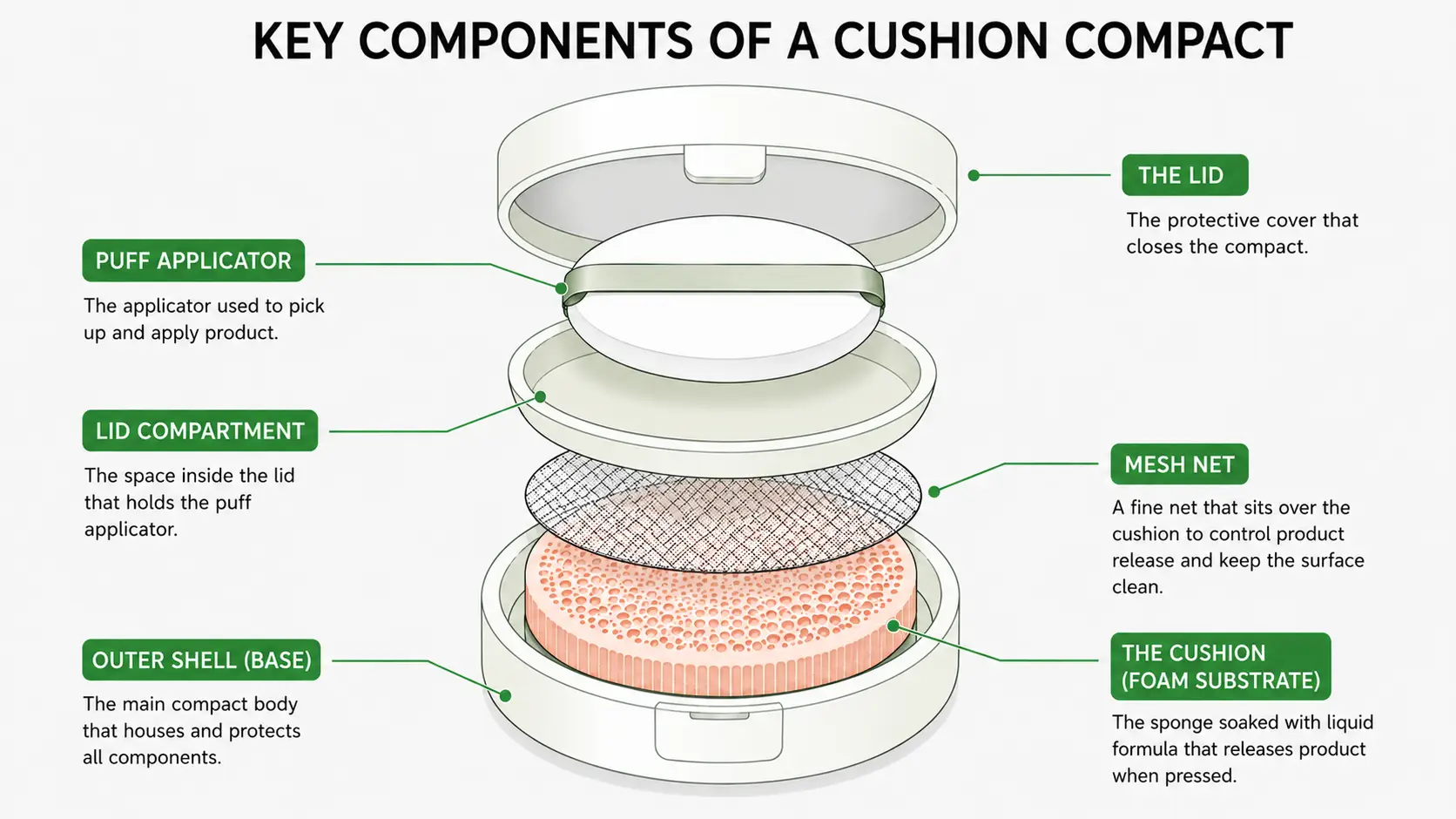
The Cushion
The cushion is a foam substrate, typically polyurethane, saturated with the liquid formula. Density is the critical variable. A denser foam releases product gradually and gives the compact a more controlled feel. A softer, more open foam transfers more formula with each press, which can work well for richer textures but can overwhelm lighter ones.
The Mesh Net
The mesh sits between the cushion and the puff, controlling how much product reaches the surface. Mesh tension and opening size need to match the formula's viscosity. A thick foundation usually benefits from a more open mesh, while lighter serum formulas need tighter control to prevent oversaturation.
The Puff Applicator
Material, thickness, and surface texture of the puff applicator all influence the finish. Softer puffs tend to diffuse coverage, while denser ones deposit more product for higher coverage. Most cushion compacts also store the puff in its own compartment inside the lid, keeping it separated from the formula between uses. That helps with hygiene and reduces unnecessary exposure to the product.
The outer compact ties everything together. Most are molded from ABS or polycarbonate, and some can include a mirror, magnetic closure, and refillable inner tray. Decoration options are extensive, with everything from hot stamping and UV printing to custom colors and etched finishes available depending on the supplier.
The definition of a cushion compact has also expanded in recent years. While traditional cushion compacts rely on a sponge saturated with formula, newer tension cushion compacts and metal cushion compacts replace the sponge with an engineered dispensing plate or membrane. They deliver the same press-to-dispense consumer experience through a different internal mechanism, giving brands additional options depending on the formula and performance they're trying to achieve. We'll look at an in-market example of this later in the article.
Cushion Compact vs. Traditional Compact: Key Differences
| Cushion Compact | Traditional Compact | |
|---|---|---|
| Formula type | Liquid or semi-liquid | Pressed powder (dry formula) |
| How the product is stored | Saturated sponge (sometimes under a protective mesh) | Dry formula pressed into a solid pan |
| Dispensing mechanism | Product is dispensed when the puff presses against the sponge, typically through a dispensing mesh. | Product is picked up directly from the exposed surface |
| Formula protection | Inner lid and sealed cushion chamber help minimize air exposure and evaporation | Open surface exposed to air |
| Best for | Foundation, BB/CC cream, tinted SPF | Powder, blush, bronzer, eyeshadow |
Cushion Compacts in the Market
The cushion compact has evolved well beyond its K-Beauty origins. While they are commonly found in Korean cosmetic or skincare brands, the format is also being used by luxury brands, drugstore brands, and everyone in between.
Prada Reveal Mesh Cushion Foundation

Source: Prada Beauty
Prada Beauty's Reveal Mesh Cushion is a refillable cushion compact that stores liquid foundation in a sponge housed inside an airtight inner case to help protect the formula between uses. The outer compact is made from Prada's Re-Nylon recycled material, while the refillable inner tray ejects and clicks back into place using a push mechanism on the back.
VT Cosmetics Reedle Shot Synergy Cushion
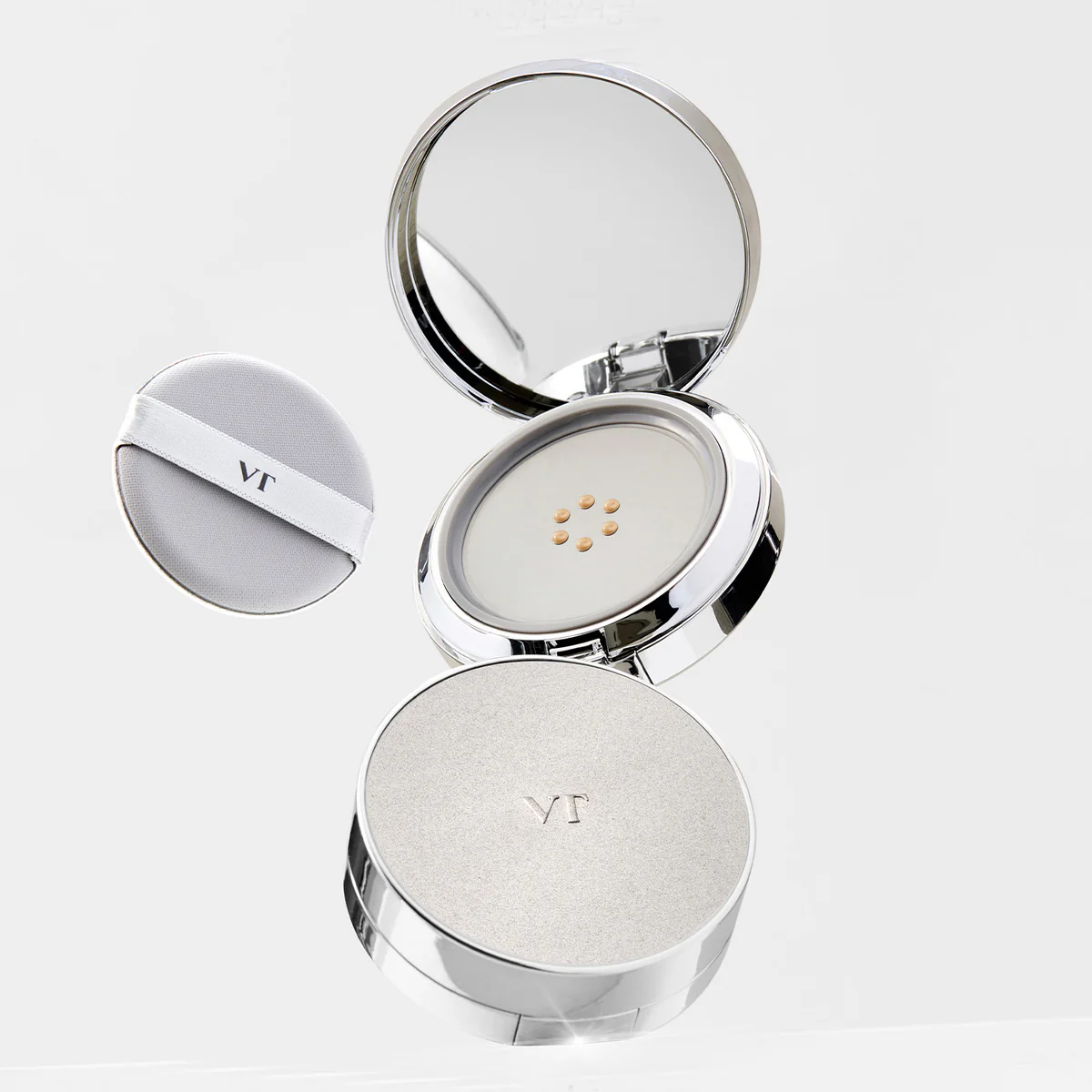
Source: VT Cosmetics
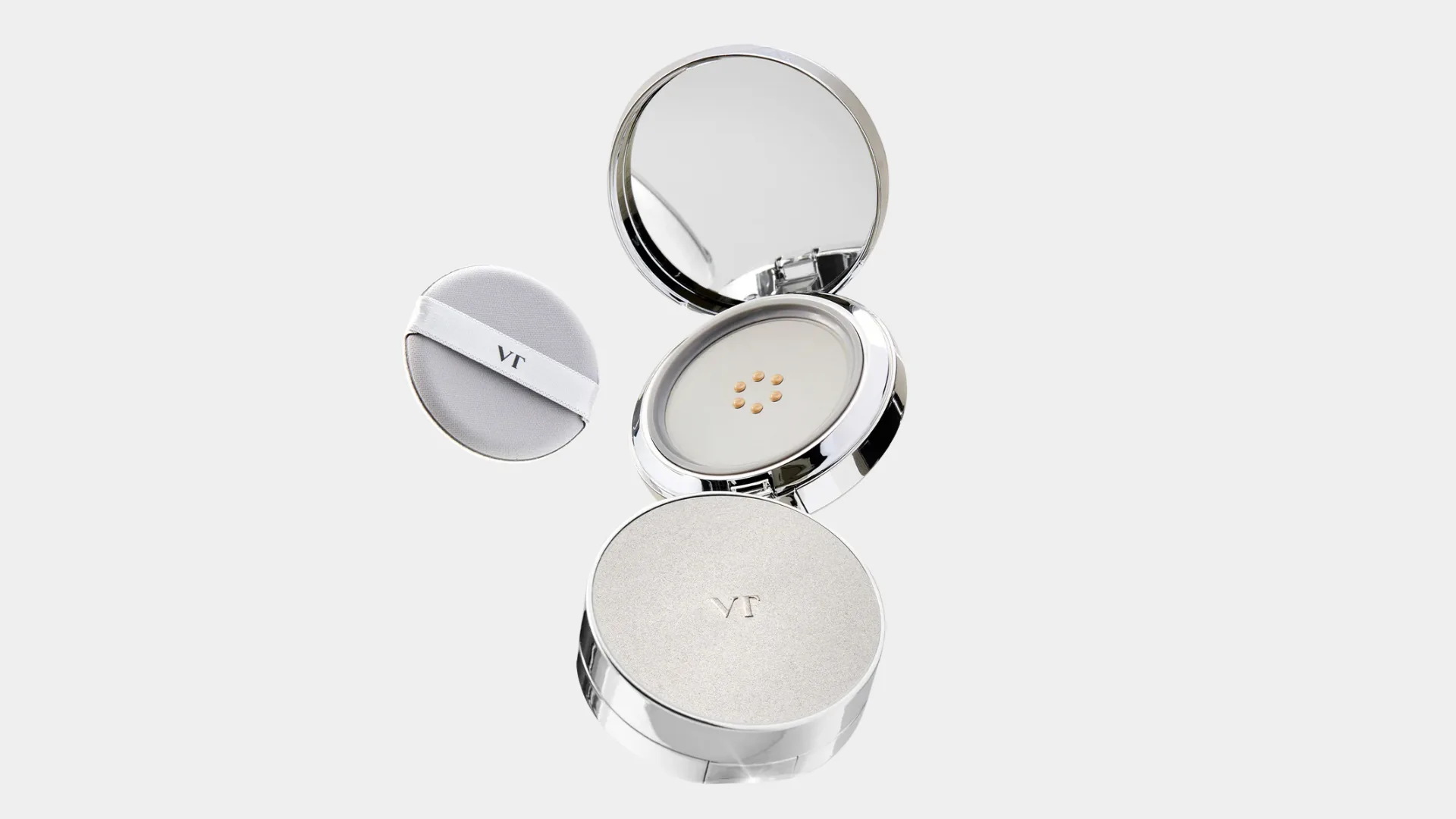
VT Cosmetics' Reedle Shot Synergy Cushion is a newer iteration of the traditional cushion compact. While traditional cushion compacts dispense liquid foundation from a porous sponge saturated with formula, this product uses a tension cushion (also called a metal cushion) that replaces the traditional sponge dispensing surface with a metal dispensing plate. The format delivers the brand's bestselling Reedle Shot technology.
Maybelline New York Dream Cushion Fresh Face Liquid Foundation
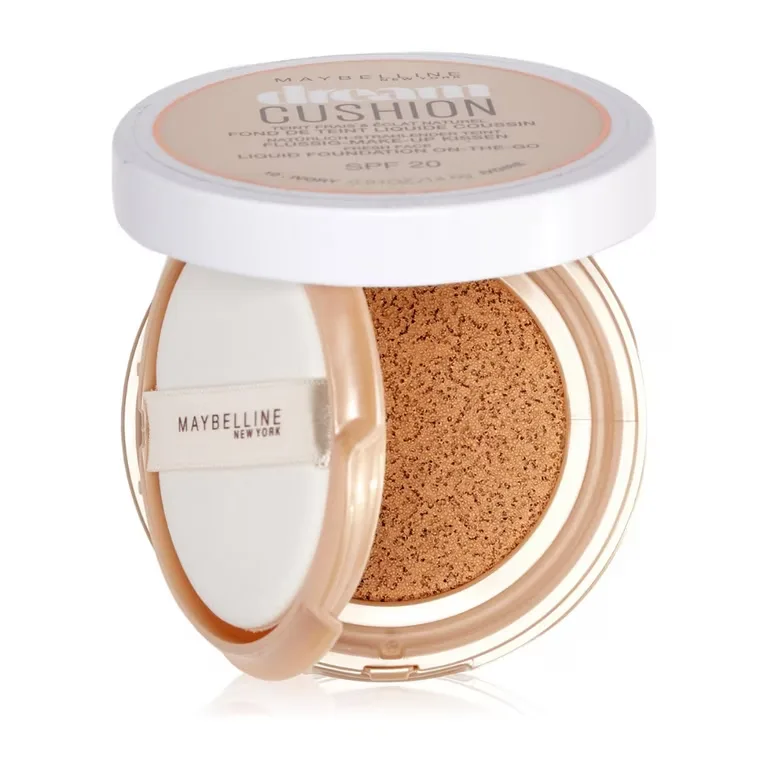
Source: Maybelline
You may have heard about cushion compacts from Maybelline's iconic Dream Cushion Fresh Face liquid foundation. It pairs a lightweight liquid foundation with SPF 20 in a portable compact, which helped introduce a much wider audience to the convenience of cushion compact packaging.
What to Evaluate When Sourcing
Not every cushion compact performs the same, even if two components look nearly identical. Before choosing a supplier, you should pay close attention to these details.
Cushion density
Always test the cushion with your actual formula. Foam density changes how much product is released with each press, so a cushion that works well for one formula may perform poorly with another.
Mesh specification
Ask suppliers which mesh options are available and whether they've been tested with formulas similar to yours. Small changes in mesh design can noticeably change product pickup.
Refill compatibility
If refillability is part of your product strategy, confirm that replacement trays are standardized across the supplier's range. It simplifies future launches and secondary packaging.
MOQ and lead time
Korean packaging suppliers excel at cushion compacts and typically offer competitive MOQs and high quality cushion mechanisms. Chinese packaging manufacturers have moved into cushion compacts as well and typically offer more flexibility for lower-volume programs or custom development.
Decoration capabilities
Find out which decoration processes are handled in-house. Suppliers that manage printing and finishing internally usually have shorter lead times, more competitive pricing and more consistent quality.
Who are the Best Cushion Compact Suppliers
Several manufacturers have built strong cushion compact stock catalogs. Samhwa offers one of the broadest selections, including multiple compact silhouettes, refillable formats, and patented airtight designs. FS Korea developed both traditional cushion compacts and an airless compact that dispenses product from an internal reservoir instead of a foam cushion. WWP Beauty & Rongyi lead in China cushion compacts with in-house decoration capabilities and PCR material options for brands looking to incorporate recycled content.
Frequently Asked Questions
What is a cushion compact?
A cushion compact is a cosmetic dispensing system designed specifically for liquid or semi-liquid formulas. Instead of holding a pressed powder, it contains a sponge saturated with product inside the compact. The formula is dispensed when an applicator puff is pressed onto the sponge, allowing the product to transfer evenly to the puff before being applied to the skin. However, the definition of a cushion compact evolved with the introduction of "tension cushions" or "metal cushions," which replace the traditional sponge dispensing surface with a metal dispensing plate while retaining the same basic cushion compact format.
What's the difference between a cushion compact and a traditional compact?
Traditional compacts are made for pressed powders, while cushion compacts are built around liquid and emulsion formulas stored inside a saturated foam cushion. That means the dispensing system, sealing requirements, and even the way the product is applied are completely different.
What formulas work best in a cushion compact?
Cushion compacts work best with liquid-to-medium viscosity formulas: foundations, BB and CC creams, tinted SPFs, serum foundations, and some liquid skincare treatments. Very thick creams don't transfer through the mesh evenly, while watery formulas can oversaturate the cushion and dispense too much product.
Are cushion compacts refillable?
Many cushion compacts are, but not all. It comes down to how the inner tray is designed. Some are made to pop out and be replaced, while others are sealed into the compact. When refillability is built into the design, it's one of the more practical refill systems in color cosmetics since consumers keep the outer case and only replace the product inside.
The cushion compact is one of the most significant packaging innovations to come out of Korean beauty, and its staying power speaks for itself. Brands across every tier keep coming back to the format because it delivers a lightweight, buildable application experience that travels well and touches up cleanly.
Browse cushion compact suppliers →
Looking for a specific manufacturer? Check out our guide to the top cushion compact manufacturers.
Sourcing cushion compacts for your next launch? Let's talk.