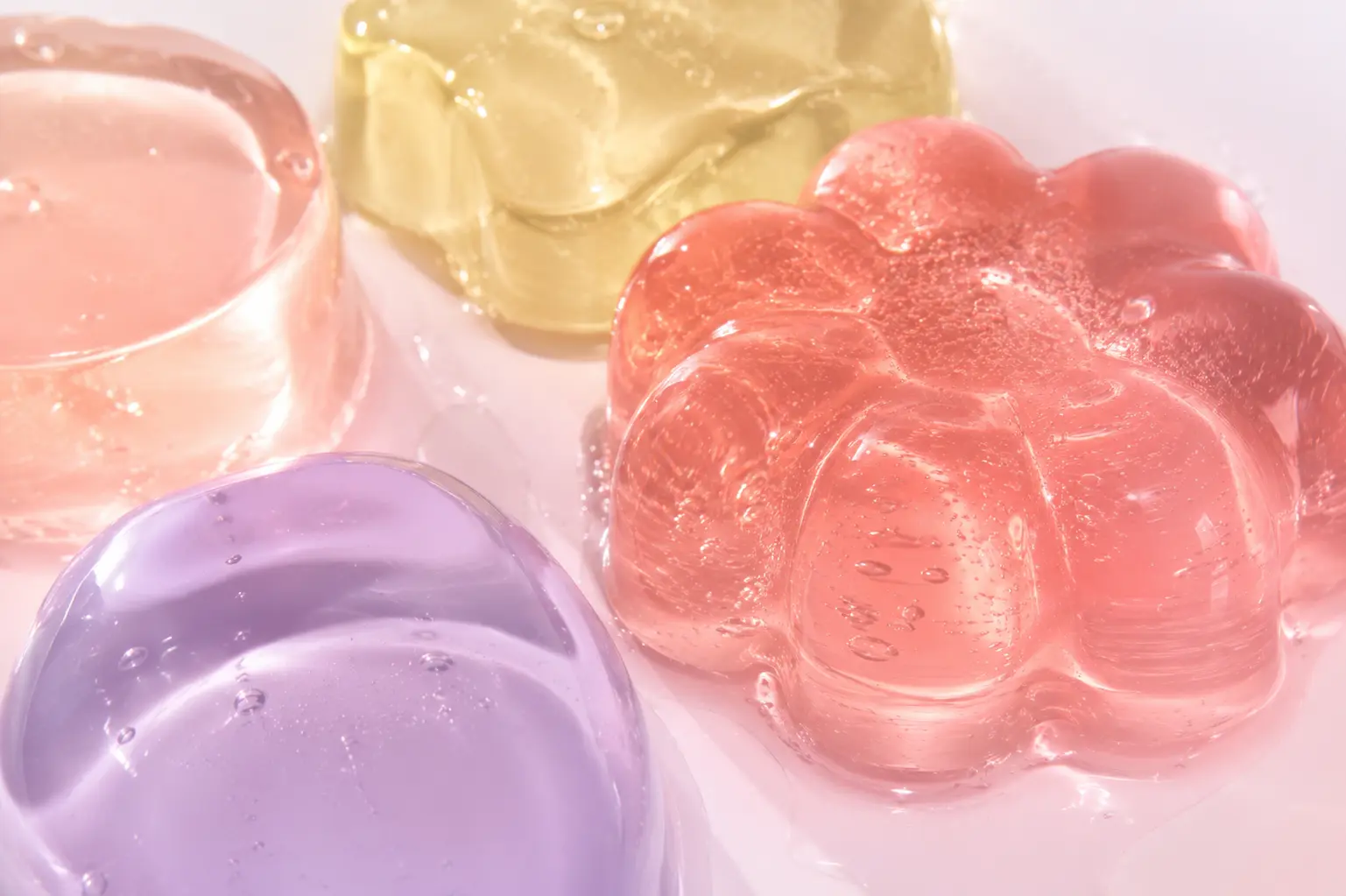
Jelly has quietly become one of the more interesting textures in beauty right now. It's suddenly on shelves everywhere: in serums, in soap, on lips, on cheeks. A year ago, I would've filed jelly textures under "fun packaging trend, probably fades within a season." I was wrong. Tree Hut and Daise both landed on jelly soap. Sol de Janeiro put its cult Cheirosa 68 scent into a jelly perfume balm. Milk Makeup built its Cooling Water Jelly Tint around the format. Madge went 3-in-1 with a jelly blush stick. Five brands, four different categories, and completely different executions. The jelly format is clearly having a moment, and we're so here for it.
Why Feel Is the New Function
Beauty has spent years obsessing over ingredients, actives, percentages, and clinical claims. Which are all important, but at some point, people also just want the product to be enjoyable to use. Creams, lotions, and balms all work, but they also all kind of feel the same.
Charged by a broader trend toward emotional wellness, we've continued to see highly sensorial beauty with a focus on creating moments of "fun" take center stage in 2026. Mintel's 2026 Global Beauty & Personal Care Predictions echo this trend, with Sensorial Synergy emerging as a top trend for the year. Two super trends combine to add fuel to the jelly fire: consumer demand for emotional wellness drives brands toward tactile experiences, while the cultural rise of social + live commerce gives way to more screentime for elevated experiences that fuel virality.
The jelly format provides a sensory, almost tactile-toy quality to it that a standard cream just doesn't have, and it turns something as routine as washing your face or dabbing on blush into a small moment you actually notice (and share!). Beauty routines are repetitive by nature. Anything that makes the repetition feel less like a chore is going to win attention, and jelly is doing exactly that.
It's also just easy to use. There's no fumbling with a pump or messy dropper situation. You just swipe, dab, or press it. It's low friction, which matters more than people give it credit for when you're talking about a product someone uses consistently for months.
K-Beauty's rise helped set this trend up. Korean brands have long led with texture (think gel-creams, jelly sleeping masks, watery essences) treating feel as core to the product, not an afterthought. That sensibility was also built for virality: a jiggly jelly texture reads far better on camera than a plain cream, which helped it spread fast through social and live commerce. What was once a niche K-beauty signature is now a mainstream formulation choice.
The Brands Doing It
Tree Hut: Jelly Soap Done Simple

Tree Hut's jelly soap is a straightforward bet: take a category people already use every day, body wash and bar soap, and give it a texture that makes the routine part feel fun and different. There aren't any bells and whistles beyond the format itself, which is honestly kind of refreshing. For decades, bar innovation has been driven by ingredient/claims changes and sustainability (unwrapped, plastic-free, etc.). Jelly Soap is a much-needed format change for a stale category that heavily skews 60 and older. In a category as commoditized as bar soap, texture is one of the few levers left that doesn't require a new claim or a new ingredient story. It's a cheap way to manufacture differentiation in a shelf that otherwise looks identical.
Daise: Landing on Jelly Soap at the Same Time

Daise landed on jelly soap around the same window as Tree Hut, and that timing is the interesting part. Two separate brands with no shared playbook that I know of, arriving at the same format independently. That's usually a better signal than one brand doing something clever on its own. It suggests the category is converging on jelly, not that one team got lucky with an R&D idea. Independent convergence is a stronger market signal than any single brand's bet. When competitors land on the same format without coordinating, it usually means the underlying consumer behavior (in this case, wanting more sensory engagement from a routine product) is real, not manufactured by marketing.
Sol de Janeiro: Cheirosa 68, Now in Jelly
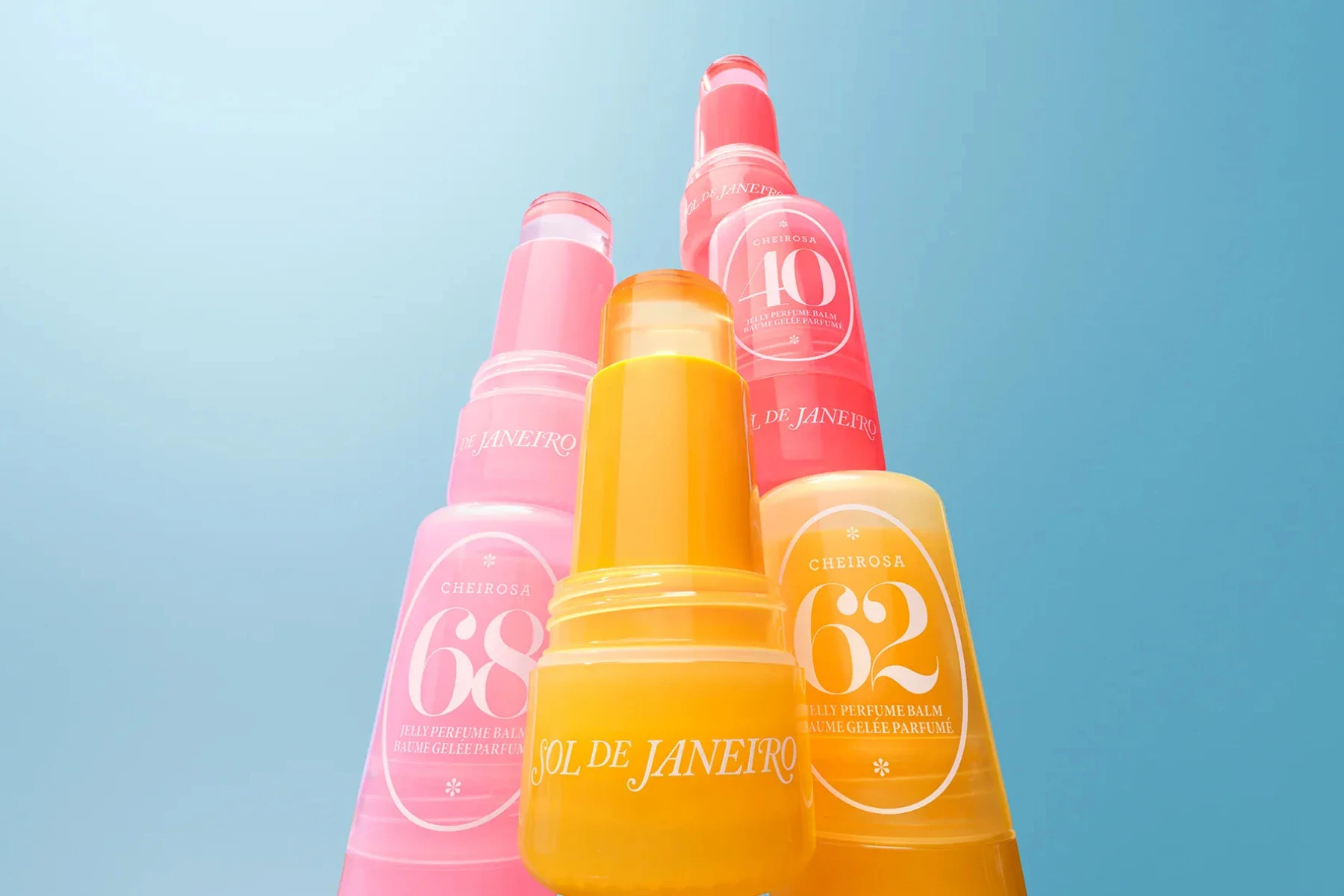
Sol de Janeiro took its cult Cheirosa 68 scent and put it into a jelly perfume balm. This is the one that made me sit up a little, because fragrance is usually the last category to mess with format. People are loyal to a scent, not exactly asking for a new texture to carry it. And perfume packaging has dabbled into solid formats but has long remained loyal to premium glass bottles. But turning a beloved scent into something bouncier and more tactile to apply is a smart way to make a familiar product feel new again without touching the thing people actually love about it. Rather than developing a new scent, which risks diluting brand equity built around Cheirosa 68 specifically, Sol de Janeiro extracted growth from a format change instead. It's a decision that other fragrance-led brands sitting on a beloved scent could copy without touching what already works.
Milk Makeup: Cooling Water Jelly Tint

Milk Makeup built its Cooling Water Jelly Tint for lips and cheeks around the cooling effect, not just the bounce. That's a jelly format doing double duty: color payoff plus a sensory hit the second it touches skin. It's a good example of jelly being used for a functional reason, not just a novelty one. Tying the format to a functional benefit (cooling) gives Milk Makeup a claim to make in marketing beyond "this feels fun." That's a more durable positioning than texture alone, since it gives the format a reason to exist beyond trend cycles.
Madge: The 3-in-1 Jelly Blush Stick
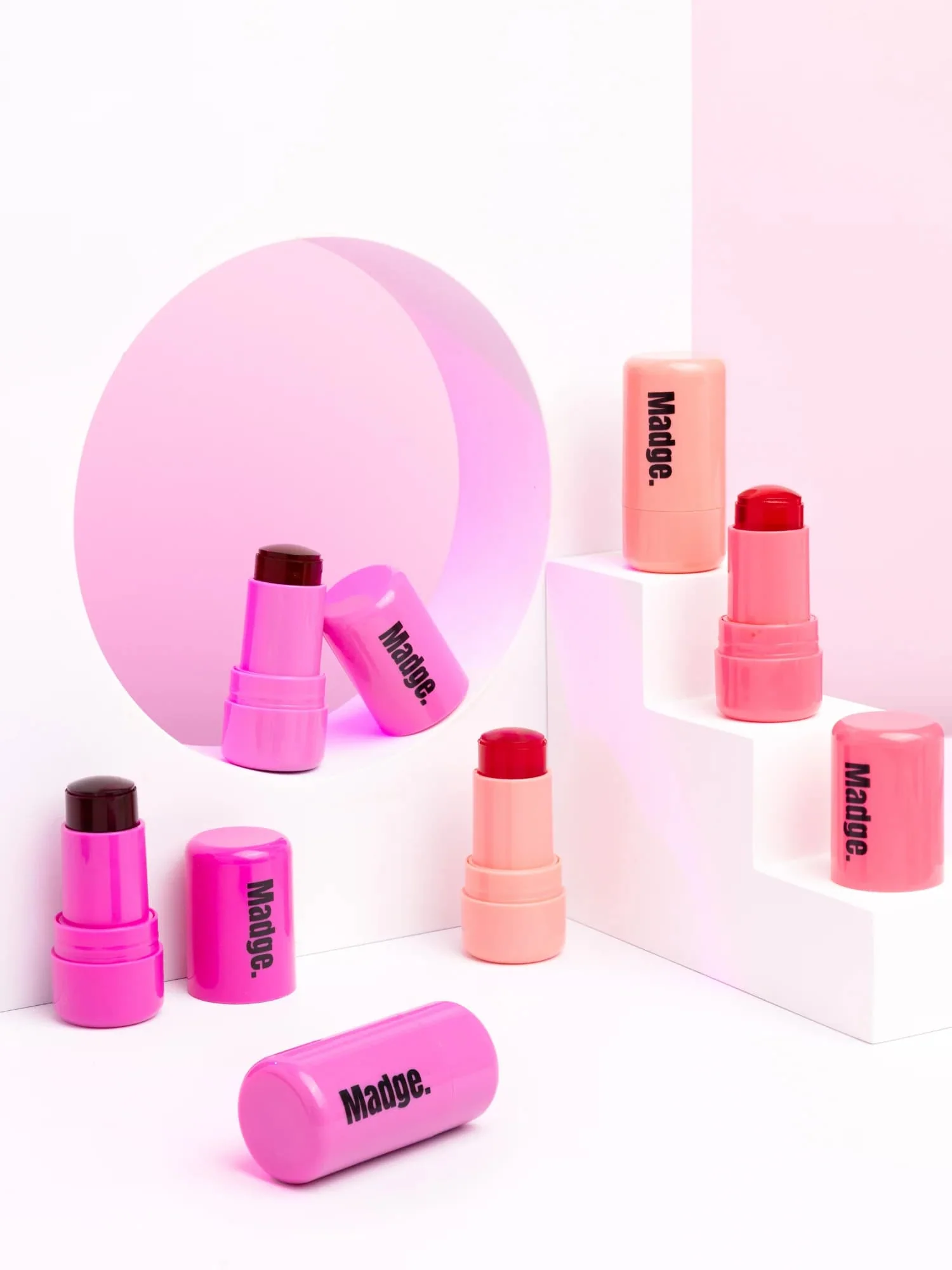
Madge went further and made its jelly blush a 3-in-1 stick. That's a bet that the format can carry real product complexity, not just live as a single-use gimmick texture. A multi-use claim is effectively a stress test: it means Madge's formulation and packaging teams are confident the texture holds up across repeated application and different use cases, not just one clean swipe. That's a meaningfully bigger commitment than a single-purpose jelly launch, and it signals that brands are starting to trust jelly as a legitimate base rather than a limited-edition stunt, one built into the core product architecture instead of bolted on as a novelty.
What This Means for Brands
Five brands, four categories, one texture. Skincare, soap, fragrance, and color cosmetics are all reaching for jelly, and the categories don't have much else in common. What ties them together isn't the formulation; it's that jelly performs on camera in a way flat creams and balms don't. Bounce, jiggle, that slow-motion give when a finger presses into it, all of that reads well in a fifteen-second video in a way "smooth, blends easily" never will. That's probably closer to the real explanation for why this is spreading across categories that have nothing else in common: brands aren't just formulating for skin feel anymore, they're formulating for the clip.
View Trending Beauty Packaging Innovations →
That's also the risk. A texture that spreads because it performs well on camera can burn out the same way. Once every brand has a jelly SKU, the format stops being a differentiator and just becomes table stakes. Whether jelly earns a permanent place in the case, or ends up as a two-year moment everyone eventually moves past, probably depends on which of these launches solve an actual application problem versus which ones were chasing the same content cycle.
For brands thinking about whether jelly fits your next launch, the packaging question is actually more contained than it looks. Jelly holds its shape well enough to typically live free-standing, like a bar of soap or a balm that sits in its own tin, in a stick, where the texture needs to be firm enough to hold up under pressure but soft enough to glide on contact, or in a jar where the consumer gets that satisfying scoop.
Source cosmetic packaging →Source skincare packaging →
Looking for packaging? Let's partner!