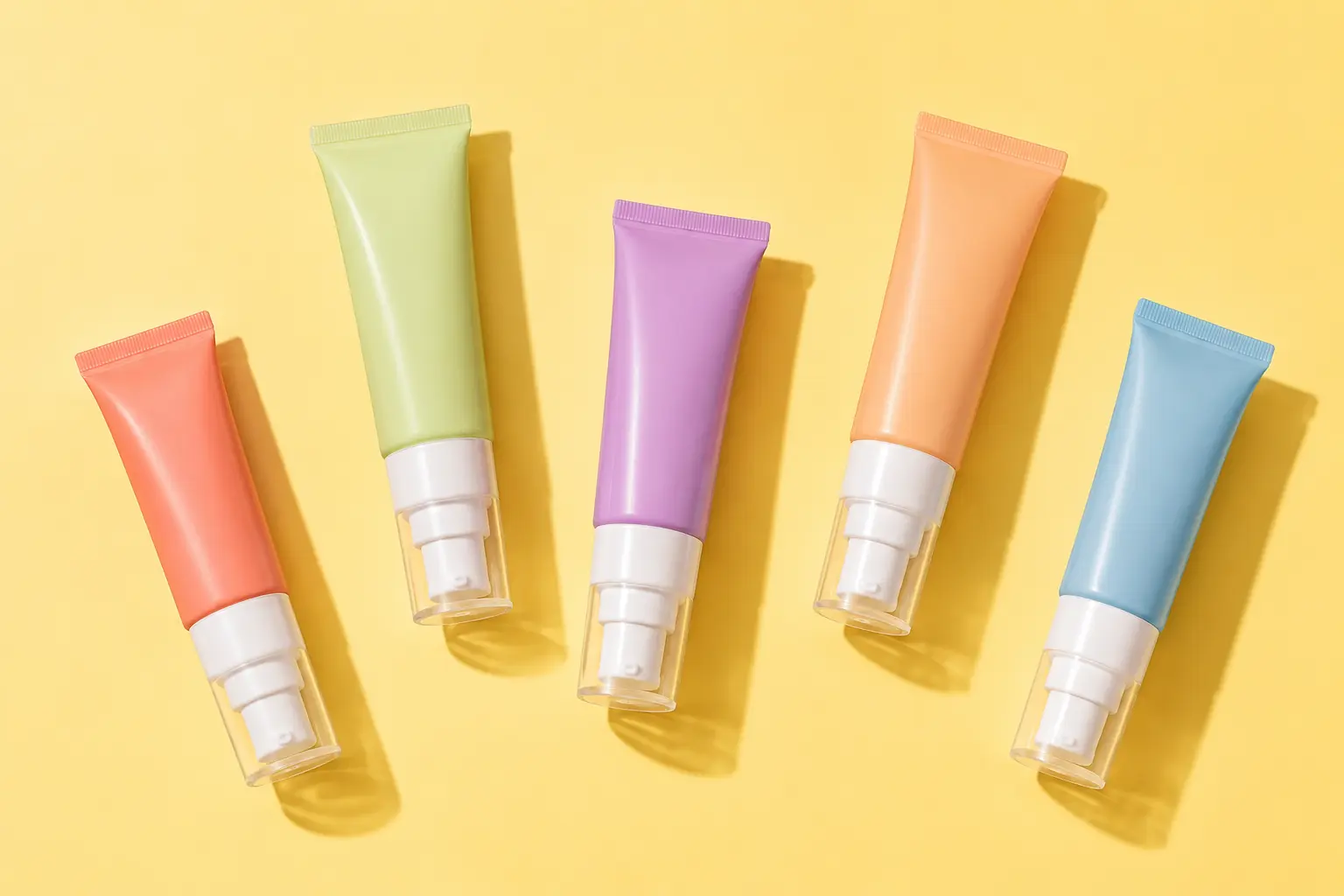
If you're sourcing packaging for a skincare formula with active ingredients, an airless pump tube deserves a serious look. It's one of the more interesting formats on the market right now — the dispensing feel is precise, it reads as premium on shelf, and it gives a product a sense of intention that a standard squeeze tube just doesn't.
Here's what the airless pump tube format actually does well, and which airless tube manufacturers are worth calling when you're ready to source.
Browse airless pump tubes on the Impacked marketplace →
Browse airless pump bottles on the Impacked marketplace →
Why Choose an Airless Pump Tube?
An airless pump tube does one job really well: it keeps air away from your formula. That matters if your product oxidizes, breaks down, or loses potency with repeated exposure. It matters a lot less if you're filling something shelf-stable and just like the way the dispensing feels.
Moisturizers are the category where this format earns its keep. Actives that are sensitive to air — think retinols, vitamin C, peptides — hold up better over the life of the product when they're not getting hit with oxygen every time someone opens the cap. That's really the whole pitch. If your formula doesn't have that vulnerability, you're paying a premium for a benefit you're not using. Worth being honest with yourself about that before you fall in love with the pump mechanism.
Airless Pump Tubes in the Market
Airless Pump Tube In-Market Examples

e.l.f. Power Grip Primer

MAKE Beauty Succulent Skin Gel Cream

MCoBeauty Oil-Free Gel Moisturiser

Dr. Loretta Barrier Repair Gel Cream

CeraVe Oil Control Moisturizing Gel-Cream

HydroPeptide Daily Drench

Papatui Facial Moisturizer with SPF
If you look at those examples already in the market, you'll notice it's not one category of brand. Mass, prestige, clean beauty, SPF — it's all in there. That's the airless pump tube format doing its job across price points, which tells you this isn't a niche packaging decision reserved for high-end serums. The format has become increasingly common for gel creams, lightweight moisturizers, SPF treatments, and other formulations where protecting active ingredients is a priority.
How Airless Pump Tubes Work
At its core, an airless pump tube replaces the traditional dip tube with a sealed dispensing system that keeps the formula isolated from outside air. Instead of relying on gravity to feed product into the pump, the package uses either a moving internal piston or a collapsible inner chamber to continuously advance the product toward the pump as it is dispensed.
The Press (Dispensing)
Pressing the actuator compresses the pump chamber, opening the outlet valve and dispensing a consistent, pre-metered dose of product.
The Release (Refilling)
As the actuator returns to its resting position, the outlet valve closes while the inlet valve opens, creating a temporary low-pressure region that draws product into the pump chamber for the next dispensing cycle.
The Product Advancement
Depending on the tube's construction, either an internal piston moves upward or the inner chamber contracts to replace the dispensed product. In both cases, the formula remains separated from outside air throughout dispensing, helping reduce oxidation, limit contamination, and maximize product evacuation.
Benefits of Airless Pump Tubes
Potential Drawbacks
Common Products Using Airless Pump Tubes
Airless pump tubes are most commonly used for skincare products that benefit from oxygen protection or controlled dispensing:
Things to Consider Before You Commit
Your formula's viscosity matters more than you'd think. Airless pump tubes rely on a sealed dispensing system to move product toward the pump, and not every texture behaves well within that system. Thin, watery formulas may not dispense consistently, while very thick creams can require higher actuation force or dispense more slowly. Test with your actual formula early. Don't assume the mechanism that worked for your last product will work for this one.
Best Airless Pump Tube Manufacturers
If you've decided the airless pump tube format is right for your formula, Lisson, UDN, and Quadpack are the three manufacturers worth considering.
Lisson
Based out of Guangzhou, China, running a 60,000-square-meter facility with nearly 100 tube patents. Their range is the widest of the three with MOQs as low as 5,000 units, so they're the natural starting point if you're still narrowing down what you want or aren't ready to commit to a bigger run.
UDN
Headquartered in Shenzhen, UDN has built one of the deepest tube catalogs in the industry — over 100 patents and 215 head styles across their portfolio. Their airless pump tubes are a standout, with strong engineering and consistent quality at scale. MOQs typically start at 10,000 units, which makes them a better fit once you've validated your format and are ready to move into production volumes.
Quadpack
Stands apart from the other two in one important way: they're headquartered in Dallas, with global manufacturing partners bringing North American produced options, alongside a strong presence in Europe and Asia.
Airless Pump Tube FAQ
What is an airless pump tube?
An airless pump tube is a dispensing package that combines the portability of a squeeze tube with the controlled dosing of an airless pump. Unlike a standard tube, it uses a sealed dispensing system that helps keep the formula isolated from outside air as the product is dispensed. Depending on the package design, the product is advanced using either an internal piston or a collapsible inner chamber, helping protect oxygen-sensitive formulations while delivering a consistent, metered dose.
How is an airless pump tube different from a standard squeeze tube?
A standard squeeze tube relies on the user squeezing the tube body to force product out through an opening. Each time the cap is removed, air can enter the package and come into contact with the remaining formula. An airless pump tube uses a pump mechanism with check valves to dispense a measured amount of product while keeping the bulk of the formula separated from ambient air. This makes airless pump tubes a better choice for formulations that benefit from reduced oxygen exposure, more controlled dosing, and higher product evacuation.
Do airless pump tubes use a piston?
Some do, but not all. Airless pump tubes generally use one of two product advancement systems: a moving internal piston or a collapsible inner chamber. Both designs continuously move the product toward the pump while helping prevent outside air from reaching the formula. The exact mechanism depends on the manufacturer and package design rather than the airless format itself.
Can airless pump tubes be recycled?
In general, tubes are more difficult to recycle than rigid bottles or jars because they often combine multiple materials. Airless pump tubes add another level of complexity with their pump assemblies, which may include springs, valves, and multiple plastic components. Some manufacturers now offer mono-material airless pump tubes made primarily from polypropylene (PP) or polyethylene (PE) that are designed to improve compatibility with existing recycling streams. If recyclability is a priority, ask suppliers about mono-material construction and design-for-recycling testing before selecting a package.
What formulas work best in airless pump tubes?
Airless pump tubes are best suited for skincare and cosmetic formulations that benefit from reduced exposure to oxygen and contamination. Common applications include moisturizers, vitamin C creams, retinol treatments, peptide creams, eye creams, SPF moisturizers, acne treatments, and lightweight gel creams. While airless pump tubes can accommodate a wide range of viscosities, every formula should be compatibility tested with the specific pump system.
Related Resources
Explore more tube packaging resources:
- Top cosmetic tube suppliers for your next product launch
- Guide to tube applicators and head styles
- Dual chamber tubes guide for multi-formula packaging
- Browse all cosmetic squeeze tubes
- Tubes FAQ for common sourcing questions
Have a formula that needs an airless pump tube and not sure where to start?