The FIFA World Cup isn't just the world's biggest sporting event — it's one of the largest packaging activation windows a brand can enter. With FIFA projecting $13 billion in revenue for the 2026 tournament, the brands that understood this early — including a few we've been watching closely — aren't running standard campaigns. They're redesigning packaging, printing collectibles, and embedding the tournament directly into the product experience.
Looking to source packaging for a limited-edition launch?
Browse packaging components on Impacked →
Why Packaging Is the Play
World Cup sponsorships have traditionally meant logo placement and broadcast ads, but that's changed. The brands making the biggest impact in 2026 are treating packaging as the activation itself, not just a surface to print a badge on. Collectible cans, country-specific designs, and QR codes that turn a pack into a sweepstakes entry show that the packaging is doing the marketing work that ad spend used to.
For product development teams watching the category, this matters. Limited-edition packaging tied to a cultural moment drives urgency, incremental velocity, and social visibility in ways that a standard media buy doesn't. Done well, it turns a functional SKU into something consumers actively seek out, and hold onto after the final whistle.
The Brands Doing It Right
Don Julio 1942: When the Bottle Becomes the Trophy

As an Official FIFA World Cup 2026 Supporter, Don Julio released a limited-edition 1942 Trophy Edition, a redesigned bottle with a luminous gold finish inspired by the FIFA World Cup Trophy and a malachite-green cap referencing the trophy's base, supported by a "Made to Be Raised" campaign featuring World Cup champion Thierry Henry. They didn't change anything about the liquid inside; the packaging is now the product. The bottle is designed to live on a shelf long after the tournament ends, creating a collectible display object that provides value through design rather than formula. It's the execution we keep coming back to when thinking about what packaging-as-product really means.
Lay's: 40 Flavors, 40 Countries
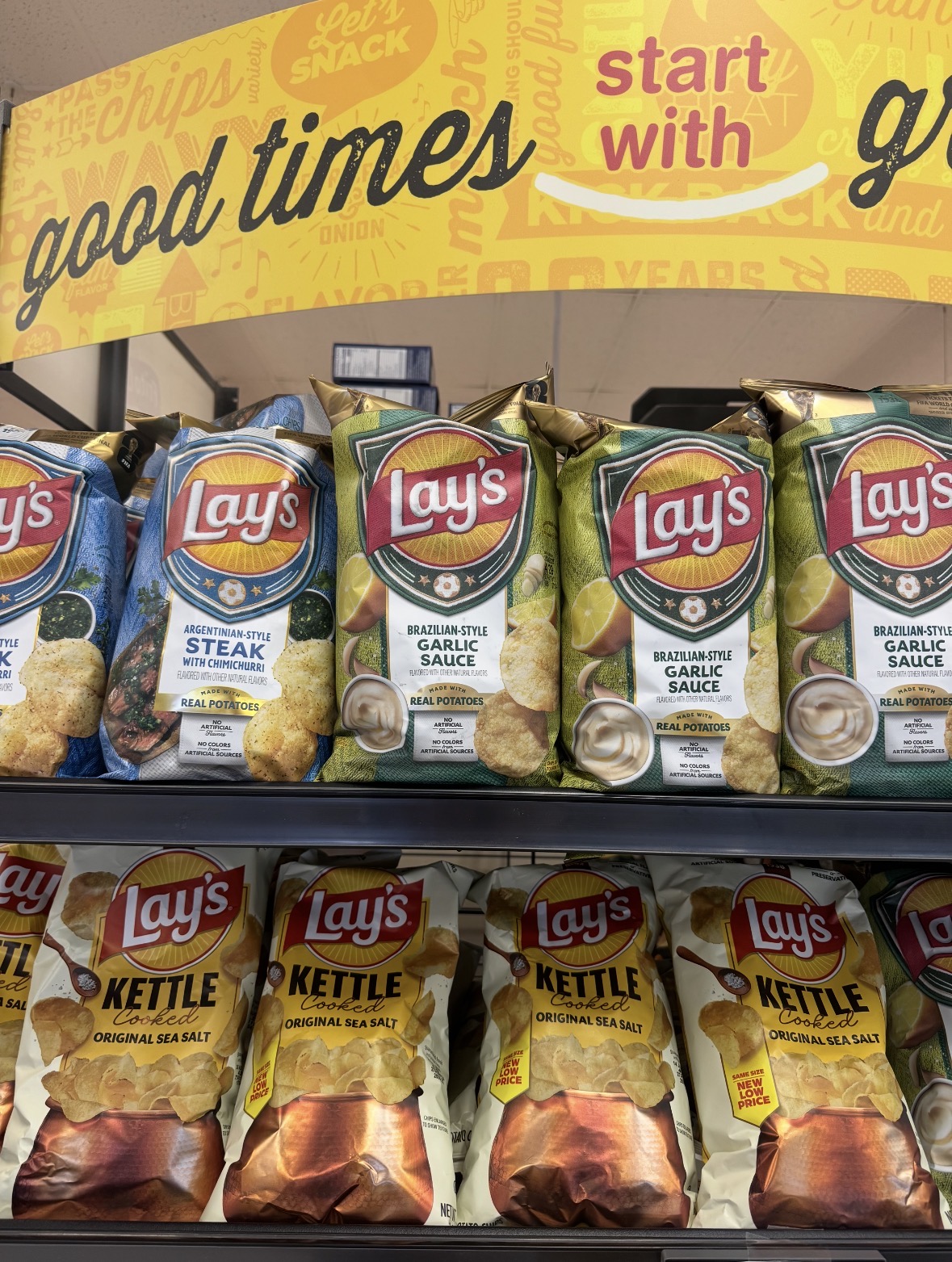
Lay's is launching 40 limited-edition chip flavors inspired by participating countries, each with country-specific packaging, a ticket sweepstakes, and a "Fan of the Match" promotion embedded directly into packs. The scale alone makes a statement: 40 SKUs for a single campaign window, but the structure behind it is what's worth studying. Every SKU is a new reason to pick it up, with the flavor serving as the hook, the packaging as the collectible, and the sweepstakes as the conversion mechanism. Providing three jobs out of a single pack.
Budweiser: 40 Years of Equity on a Can

Budweiser has been a FIFA World Cup sponsor since 1986, and for 2026 they're using that history as the creative brief. Their global collectible can and bottle series is anchored by a campaign they're calling "Budstalgia." It walks through four decades of tournament history, with each pack referencing a specific era from 1986 through 2026. The strategic logic they're using is straightforward: longevity is an asset, and most brands can't buy 40 years of World Cup association. Budweiser owns it, and the packaging is how they prove it, and watching how they've deployed that equity on-pack is something we find genuinely worth studying.
Dove: QR Codes as Campaign Infrastructure
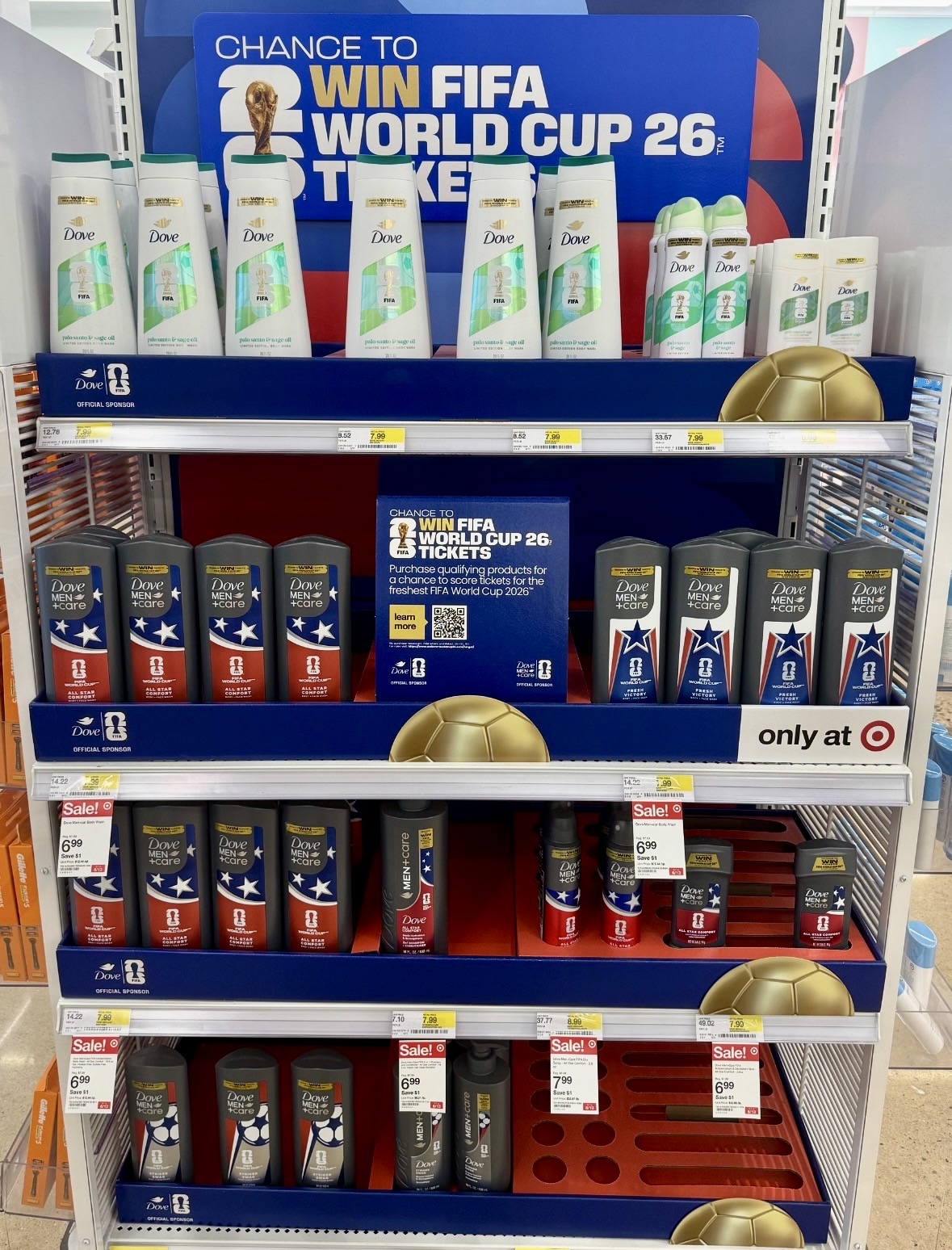
I spotted this activation in-store and was impressed by how well this end cap display combined with limited edition FIFA artwork brought the campaign to life.
Dove Men+Care is running limited-edition FIFA-themed deodorant sticks and body wash packaging with QR codes on-pack linking to World Cup ticket giveaways, backed by a campaign aimed at soccer fans: "Care for Your Skin Like You Care for the Game." The QR code execution is worth noting because it transforms a physical SKU into a digital activation point without changing the product or the formula. For brands that have been slow to bridge physical packaging to digital engagement, this is a clear and replicable playbook showing the pack can be the entry point.
Dr. Squatch: Taking the Fan-Engagement Playbook Somewhere New
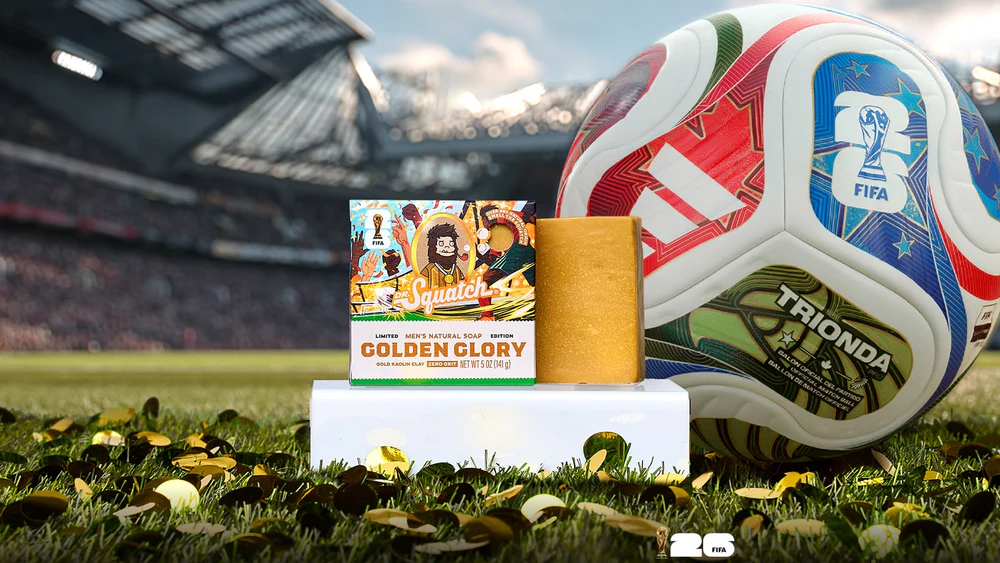
Dr. Squatch's entry into FIFA World Cup 2026™ as an Official Sponsor marks the brand's first major global sports sponsorship. Bringing the tournament into the bar soap aisle with Golden Glory, a limited-edition soap designed specifically for the World Cup with exclusive FIFA branding and packaging. A sweepstakes offering fans the chance to win tickets to the Final in New York City closes the loop on the campaign. What this activation really demonstrates is that the tournament-packaging playbook isn't category-specific, it's a framework any brand can apply when the packaging gives consumers a genuine reason to engage, and Dr. Squatch had the conviction to be the first to prove it in a space nobody had thought to look.
What This Signals for Packaging Strategy
Five brands, five different categories, and a consistent pattern we've been tracking: the 2026 World Cup is being treated as a packaging moment, not just a media moment. The brands executing well share a few things in common, with the packaging carrying a job beyond containment, whether that's collectibility (Budweiser, Lay's), digital activation (Dove), category expansion (Dr. Squatch), or object permanence (Don Julio). Limited-edition isn't being used as a tactic here; it's functioning as an operating model where the constraint itself creates demand.
The window for tournament-moment packaging is narrow, but brands that move fast enough to align packaging development with major cultural moments aren't just capturing awareness. They're building the kind of product experience that lives in the market longer than the campaign does.
Planning a limited-edition launch? Let's talk.